SINI On the Move: Manali Summer Program

May 29, 2025

Finding Home in the Foothills

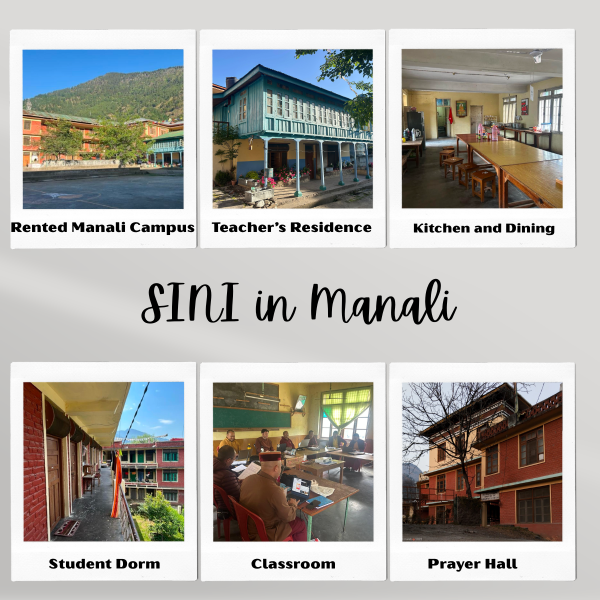
The SINI group packed everything up and headed to Manali in mid-April to escape the Sarnath heat. From 5th May the classes officially began for the summer program in Manali. While we miss the comforts of the SINI campus, everyone is looking forward to the new place as well. Manali is in the foothills of the Himalayas and has clean air and water, beautiful mountains, and the well-known Beas River, also known as the Bias River. It originates in the Himalayas in central Himachal Pradesh and flows towards the Sutlej River in Punjab Many of the students grew up in places like this, so it feels like a little bit of home. Our accommodations don’t match the ones at SINI, but that means we spend more time out doing things together. When we aren’t in class, some of us go hiking in the mountains, bathing in the hot springs, or playing basketball in the courtyard. These experiences, along with the possibility of floods and earthquakes, help us become a tighter community.

Patlikuhal: Basketball, Hot Springs & Cool Rain

We have now settled into life in Patlikuhal, TCV School. The town is relatively calm and the weather is cool and rainy. Hawkers sell fruit and knock-off Adidas on the side of the road. In the afternoons, there is an ongoing basketball tournament between some of the students, EDP1 vs. EDP2+3, while others go to the gym or hot springs. The students have decided to speak only English here, so they are getting in a lot of practice, though that rule goes out the window on the basketball court! Teacher Tanner and some former students arrived this weekend to start translation work, and we will celebrate Vesak on Monday.

Learning Beyond the Classroom Walls

In addition to the ongoing campus classes, two other meaningful programs are underway. One is a translation project on the Kangyur Karchak led by Teacher Tanner, and the other is a community outreach effort guided by our Principal Ngawang and taught by Khenpa Dawa in Manali. Together, they expand the spirit of learning and connection beyond the classroom.
Observations From Principal Ngawang

“It may seem small, but when mothers bring learning into the home,
the whole environment begins to change.”

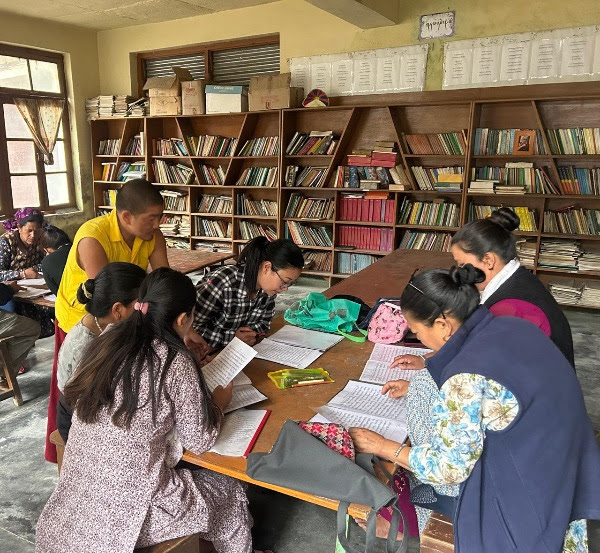
Tibetan Reading Class at Manali-SINI, is a  quiet commitment. From what I’ve observed, most of the participants this year are women—many of them mothers. They attend the Tibetan reading class organized by SINI in between their daily housework and family responsibilities. Most are local residents of the area and while many cannot speak Tibetan fluently, they are now able to read Tibetan script with growing confidence. Their deep faith in Buddhism and strong interest in learning Tibetan is what brings them back each day.

The class runs daily from 11:30 a.m. to 12:30 p.m. We focus on helping them improve their reading skills and also provide brief introductions to basic Buddhist teachings.

This program has been running every summer for the past three years, continuing for four months each year. We sincerely hope it can continue in the years to come. It may seem like a small initiative, but the consistent participation of these mothers is quietly making a meaningful impact—on their families and their wider community.

Reflections from Khenpo Dawa

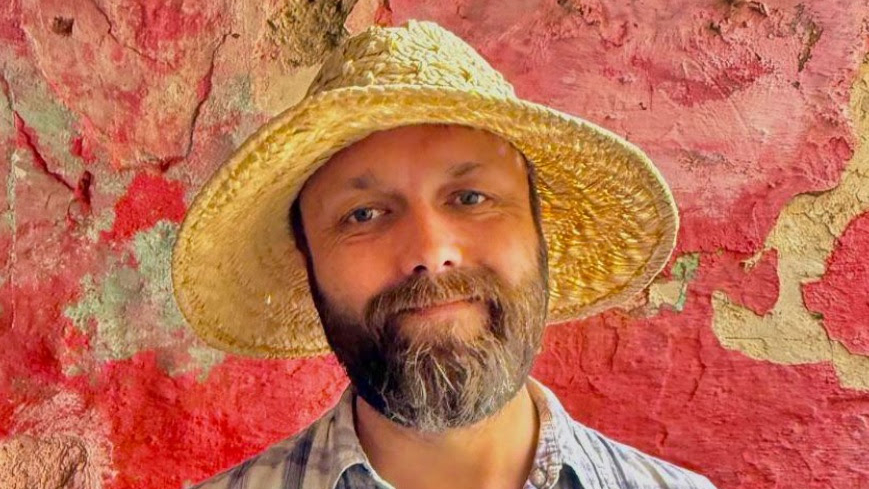
“When people learn to read and understand Tibetan, it really helps them connect with the Dharma in a more personal and meaningful way.”

Under the guidance of our Director, Tsering Gellek, this community outreach program began three years ago as part of SINI’s summer activities in Patlikuhal, Manali. The aim was to foster engagement with residents in the area. 

The Himalayan region has deep Buddhist roots, and much of its essence is preserved in the Tibetan language. So, when people learn to read and understand Tibetan, it really helps them connect with the Dharma in a more personal and meaningful way.

This year, I had the chance to join the program as a teacher. We have around 20 students engaging in the class every day. While my main focus is on helping students improve their Tibetan reading skills, I also occasionally introduce them to Tibetan calligraphy. Alongside reading practice, I share basic teachings on Buddhism by using selected passages from “The Thirty-Seven Practices of Bodhisattvas (རྒྱལ་སྲས་ལག་ལེན་སོ་བདུན་མ) and The Way of the Bodhisattva (བྱང་ཆུབ་སེམས་དཔའི་སྤྱོད་པ་ལ་འཇུག་པ).” These two texts are key guides on the values and actions of the bodhisattva path.

For me, it’s been a meaningful chance to apply what I learned during the recent teacher training at SINI, which was Organised by SINI and led by His Holiness Dzongsar Khyentse Rinpoche. The training introduced practical and effective methods, like Bloom’s Taxonomy and Memory-Based learning through body, speech, and mind. Using these tools has helped me better support my students—many of whom are learning to read Tibetan script for the first time.

As the Tibetan saying goes, “Even a great river begins as a small stream.” While this initiative may be modest in scale, the impact it has made on the lives of participants is both tangible and inspiring. It stands as a beautiful testament to the power of education, faith, and cross-cultural connection.

Community Outreach: SINI’s EDP Level 2 Khenpo Dawa teaching Tibetan reading to Manali residents.

Search SINI

Close